
Flexible Financing Options Available
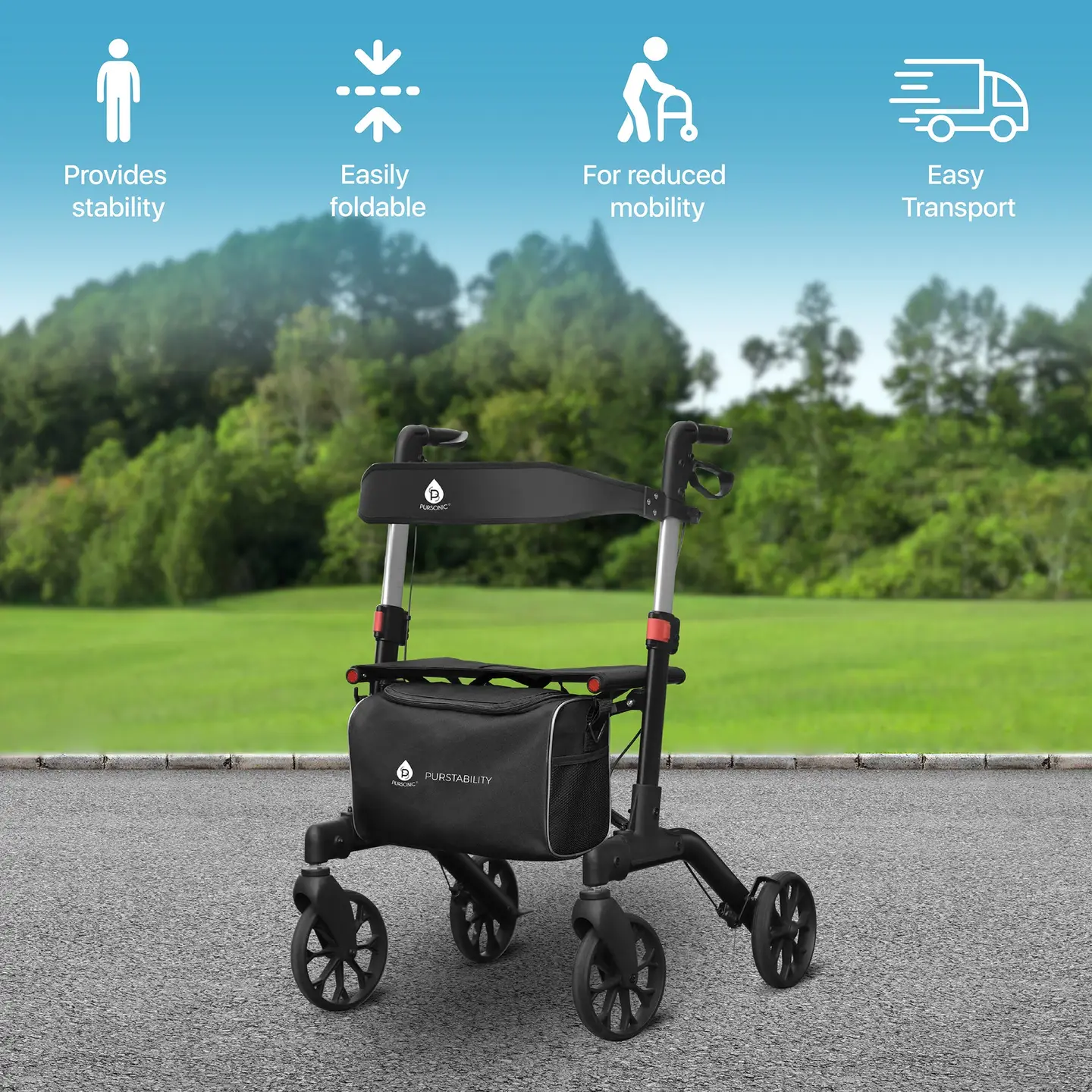

Walkers and rollators can both provide additional support while walking, but they aren’t interchangeable.
A traditional walker is designed to provide a stable frame for support. A rollator moves on wheels and is designed for people who can safely manage a device that rolls with them. Between those two are additional options, including two-wheel walkers, that combine characteristics of both.
That means the best choice isn’t necessarily the device with the most features.
It’s the one that provides the appropriate type of support for the person using it.
If a mobility aid has been recommended for you—or you’re beginning to research the available options—understanding the basic differences is a good place to start.
Quick Take
Walkers generally provide more stationary support, while rollators are designed to move continuously with the user and typically include three or four wheels, hand brakes, and often a seat.
Neither is universally better.
Your balance, strength, walking pattern, ability to operate the device, and where you’ll use it can all influence which option is appropriate. If you’re experiencing new walking or balance difficulties, or aren’t sure what level of support you need, a physical therapist or other qualified healthcare professional can help determine the appropriate type of mobility aid.
First, What Is a Walker?
A walker is a frame that provides support in front of and alongside the user while walking.
There are different configurations, but two common types are standard walkers and two-wheel walkers.
Standard Walkers
A standard walker typically has four nonskid tips rather than wheels.
To move forward, the user generally lifts or advances the walker, places it back on the floor, and then steps into the frame as appropriate for the walking pattern they have been instructed to use.
Because the walker doesn’t freely roll away, it can provide substantial stability for people who need that type of support.
The trade-off is that moving it requires more effort and creates a stop-and-start walking pattern.
Two-Wheel Walkers
A two-wheel walker typically has wheels on the two front legs and nonskid tips or glides on the rear legs.
Instead of completely lifting the walker with every step, the user can generally roll the front forward while the rear legs remain in contact with the floor.
For some people, this can allow a smoother walking pattern while still providing more controlled movement than a four-wheel rollator.
What Is a Rollator?
A rollator is a wheeled walking aid, commonly with three or four wheels.
Unlike a standard walker, it is designed to roll as the person walks.
Four-wheel rollators commonly include:
- Hand-operated brakes
- A seat
- Handlebars
- A storage pouch, bag, or basket
- Larger wheels than many traditional walkers
Many people like rollators because they move smoothly and the built-in seat provides a place to rest during longer outings.
But those conveniences don’t mean a rollator is appropriate for everyone.
Because the device rolls, the user needs enough balance, control, coordination, and hand function to manage it safely.
Walker vs. Rollator: The Main Difference
The simplest way to understand the difference is to think about how the device behaves when you put weight on it and move forward.
A traditional walker provides a more stationary support structure.
A rollator is designed to move with you.
That distinction affects almost everything else.
| Consideration | Walker | Rollator |
|---|---|---|
| Movement | Lifted or partially rolled forward, depending on type | Rolls continuously |
| Wheels | None or typically two | Typically three or four |
| Brakes | Generally not hand-operated | Typically hand brakes |
| Built-in seat | Generally no | Common on four-wheel models |
| Walking pace | More controlled, stop-and-go | Smoother, more continuous |
| Weight-bearing support | May provide greater support depending on type and use | Not intended to provide the same stationary support as a standard walker |
| Outdoor maneuverability | Depends on model and wheel configuration | Larger-wheel models may handle outdoor surfaces more easily |
| Storage | Usually minimal | Often includes a pouch, basket, or bag |
This comparison is only a general overview. Individual products vary, and the appropriate device depends on the person using it.
Don’t Choose Based on Appearance Alone
Rollators often look more convenient.
They may have a padded seat, larger wheels, a storage compartment, and several other useful features.
That can make it tempting to assume:
“Why wouldn’t I just get the rollator?”
Because convenience and support aren’t the same thing.
Someone who needs to place significant weight through a walking aid may have very different requirements from someone who primarily needs light support while walking longer distances.
Likewise, a person who cannot reliably operate hand brakes may not be well suited to a device that depends on them.
The question isn’t:
Which device has more features?
It’s:
Which type of support is appropriate for the person using it?
Think About How Much Support You Need
This is one of the most important considerations and one of the reasons choosing a mobility aid shouldn’t always be a do-it-yourself decision.
Different walking aids provide different types of assistance.
Someone may need help with:
- Balance
- Weight-bearing
- Endurance
- Stability
- Confidence while walking
- Recovery from an injury or procedure
Those aren’t necessarily the same problem.
If you aren’t sure why you’re having difficulty walking or what level of support is appropriate, talk with a qualified healthcare professional before choosing a device.
A physical therapist or occupational therapist can evaluate how you walk, determine what type of assistance may be appropriate, and teach you how to use the device correctly.
Consider Where You’ll Use It
Once you know which type of mobility aid is appropriate, think about the environment where you’ll use it.
Inside the Home
Indoor use may involve:
- Narrow hallways
- Furniture
- Doorways
- Bathrooms
- Kitchens
- Tight turns
Overall width and maneuverability can matter considerably.
A large rollator that’s comfortable on an outdoor walkway may feel cumbersome in a small bathroom or narrow hallway.
Before choosing a device, consider the spaces it needs to navigate every day.
Outdoors
Outdoor environments introduce different challenges:
- Sidewalk joints
- Uneven pavement
- Parking lots
- Ramps
- Pavers
- Changes in surface
Wheel size and design can affect how easily a wheeled device moves over different surfaces.
A rollator designed primarily for smooth indoor floors may behave differently from one intended for more varied everyday use.
Always follow the manufacturer’s guidance regarding appropriate surfaces and use.
Why Wheel Size Matters
Wheel diameter may seem like a minor specification, but it can influence how a rollator feels in everyday use.
Larger wheels may make it easier to travel over certain sidewalk seams and minor surface irregularities.
Smaller wheels can help keep a device compact and may work perfectly well on smooth indoor surfaces.
That doesn’t mean larger wheels are automatically better.
They may add size or weight to the rollator, which matters if you have limited storage space or frequently transport it in a vehicle.
As with most mobility equipment, there’s a trade-off.
Think About the Brakes
Rollator brakes aren’t just another feature.
They’re an important part of operating the device.
Many rollators use bicycle-style hand brake levers. The user squeezes the handles to slow or stop the rollator and typically pushes or pulls a mechanism to lock the brakes when sitting, depending on the model.
Before choosing a rollator, consider whether the user can:
- Reach the brake levers comfortably
- Squeeze them with adequate hand strength
- Operate both brakes as intended
- Understand when and how to lock them
- Reliably engage the parking brake before sitting
If hand strength, coordination, sensation, or cognition makes brake operation difficult, discuss that concern with an appropriate healthcare professional.
A Rollator Seat Can Be Useful
One of the most appealing features of a four-wheel rollator is the built-in seat.
For someone who tires during longer outings, having a place to stop and rest can be very useful.
But the seat should be used according to the manufacturer’s instructions.
Generally, that means the rollator should be positioned appropriately and the parking brakes should be fully engaged before sitting.
A rollator isn’t a wheelchair and generally should not be used to transport a seated person unless the specific device is explicitly designed and approved by the manufacturer for that purpose.
That’s an important distinction.
Proper Fit Matters
Even the right type of mobility aid can be uncomfortable or difficult to use if it isn’t properly adjusted.
Handle height affects:
- Arm position
- Posture
- How the user applies pressure to the device
- Walking position
A device that’s too tall or too short can change how someone stands and moves.
Many walkers and rollators have adjustable handle heights, but adjustability alone doesn’t guarantee proper fit.
If a healthcare professional has recommended the device, ask them to help ensure it’s adjusted appropriately and that you understand how to use it.
Pay Attention to the Overall Width
This is especially important for home use.
Before choosing a walker or rollator, think about the narrowest spaces it will need to pass through.
Measure areas such as:
- Bathroom doors
- Bedroom doors
- Hallways
- Spaces between furniture
- Kitchen pathways
Don’t look only at whether the device technically fits through a doorway.
There should be enough room to maneuver it comfortably without repeatedly bumping into walls, furniture, or door frames.
Consider the User’s Height and Body Size
Mobility aids aren’t one-size-fits-all.
Check the manufacturer’s specifications for:
- Recommended user height
- Handle-height adjustment
- Weight capacity
- Seat width, if applicable
- Seat height
- Overall dimensions
For a rollator with a seat, both walking fit and sitting fit matter.
A seat that’s too high may make it difficult for someone to place their feet securely on the floor while resting. One that’s too low may make standing back up more difficult.
Again, individual fitting may be especially important when someone has specific mobility limitations.
How Easy Is It to Fold?
If you’ll regularly transport the device, don’t overlook this.
Ask:
- Does it fold?
- How does it fold?
- Does it remain folded?
- How much does it weigh?
- Can you comfortably lift it?
- Will it fit in your vehicle?
- Does anything need to be removed first?
A rollator can be wonderful to use once you reach your destination but frustrating if getting it in and out of the car is difficult.
Transportation should be part of the buying decision from the beginning.
Weight Matters More Than You Might Expect
The lightest mobility aid isn’t automatically the best one.
But weight becomes important when someone has to repeatedly:
- Lift it into a trunk
- Move it between floors
- Store it in a closet
- Carry it over a threshold
- Handle it without assistance
When comparing two otherwise suitable devices, think about who will actually be lifting them.
A difference of several pounds may not sound significant on paper but can feel very different when repeated several times a day.
Think About Storage
Four-wheel rollators frequently include a storage pouch, bag, basket, or compartment.
That can be useful for carrying:
- A phone
- Wallet or purse
- Water bottle
- Small personal items
- Light purchases
But avoid hanging heavy bags from the handlebars unless the manufacturer specifically permits it.
Adding weight in the wrong place can affect how a mobility aid handles or balances.
Follow the manufacturer’s limits and instructions for storage accessories.
What About 3-Wheel Rollators?
Three-wheel rollators are another option you may encounter.
Their triangular configuration can make them relatively compact and maneuverable, which may be useful in tighter spaces.
However, they generally don’t provide the same seating arrangement as a typical four-wheel rollator, and their design and stability characteristics differ.
Rather than thinking of a three-wheel rollator as a smaller version of a four-wheel model, consider it a separate configuration with its own advantages and trade-offs.
Common Mistakes to Avoid
Assuming a rollator is an upgraded walker
It isn’t. A rollator provides a different type of support and isn’t appropriate for everyone.
Choosing based only on the seat
A seat is convenient, but safe walking support should come first.
Ignoring the brakes
The user needs to be able to operate the braking system reliably.
Buying the wrong size
Handle height, overall dimensions, weight capacity, and seating dimensions all matter.
Forgetting about the home
Make sure the device can navigate the spaces where it will actually be used.
Ignoring transportation
Check weight and folded dimensions before discovering that the device is difficult to load into your vehicle.
Borrowing someone else’s device without checking fit
A mobility aid that worked well for a friend or relative may be the wrong type, size, or adjustment for you.
Choosing a mobility aid without understanding why you need it
If you’re experiencing new balance or walking difficulties, the first step may be professional evaluation rather than shopping.
Questions to Ask Before Choosing a Walker or Rollator
Once you know what type of mobility aid is appropriate, these questions can help you compare individual models:
- Where will I use it most often?
- Do I need a standard walker, two-wheel walker, or rollator?
- Has a healthcare professional recommended a particular type?
- Is the handle height appropriate for me?
- Does it fit through the spaces I use at home?
- Can I comfortably control it?
- If it has hand brakes, can I operate them reliably?
- Do I need a seat for rest breaks?
- Is the seat the right height and width?
- What surfaces will I regularly travel over?
- How much does the device weigh?
- Can I lift it into my vehicle?
- How easily does it fold?
- Where will I store it?
- Does the manufacturer offer the accessories I actually need?
These questions turn a wall of specifications into something much more useful: a comparison based on everyday life.
Frequently Asked Questions
Is a rollator better than a walker?
No. They provide different types of support. A rollator may offer smoother movement, a seat, and convenient storage, while a walker may provide more controlled or stationary support. The appropriate choice depends on the user’s individual mobility needs.
Who should use a rollator?
A rollator may be appropriate for someone who benefits from walking support but can safely control a wheeled device and operate its brakes. Individual needs vary, so a healthcare professional can help determine whether a rollator is appropriate.
What’s the difference between a walker and a two-wheel walker?
A standard walker typically has four nonskid tips and is advanced by lifting or repositioning it. A two-wheel walker has front wheels that allow it to roll forward while the rear legs provide additional control.
Can you sit on a rollator?
Many four-wheel rollators include seats designed for resting. Follow the manufacturer’s instructions and engage the parking brakes before sitting.
Can someone push me while I’m sitting on a rollator?
A standard rollator generally isn’t intended to function as a transport chair. Don’t use one to transport a seated person unless the manufacturer specifically states that the device is designed and approved for that purpose.
Are bigger wheels better on a rollator?
Not always. Larger wheels may handle certain outdoor surfaces and small irregularities more easily, but they can also affect the device’s overall size and weight. Choose based on where you’ll use the rollator.
How high should walker or rollator handles be?
Proper height depends on the individual and affects posture and walking mechanics. Rather than relying on a general rule if you have specific mobility needs, ask the healthcare professional recommending your device to help with fitting and adjustment.
Do I need a rollator with a seat?
That depends on how you’ll use it. A seat can be valuable if you need rest breaks during longer outings, but it shouldn’t be the deciding factor if another type of mobility aid provides more appropriate walking support.
Can walkers and rollators be used outside?
Many can, but their suitability varies by design, wheel size, surface, and manufacturer recommendations. Check the specifications for the particular model you’re considering.
Do Medicare or insurance pay for walkers and rollators?
Coverage depends on the payer, eligibility requirements, medical necessity, supplier participation, and the specific equipment involved. Check directly with your insurance plan or Medicare and an enrolled supplier for current coverage requirements.
Key Takeaways
Choosing between a walker and a rollator isn’t about deciding which device has more features.
It’s about finding the right type of support.
A traditional or two-wheel walker may provide more controlled support for someone who needs it. A rollator may offer easier continuous movement, a place to rest, and convenient storage for someone who can safely manage a wheeled device.
Once the appropriate type has been determined, consider:
- Proper fit
- Handle adjustment
- Width and maneuverability
- Brakes
- Wheel size
- Seat dimensions
- Weight
- Folding and transportation
- Where the device will be used
And if you’re experiencing new walking, strength, or balance difficulties—or don’t know what type of support you need—start by talking with an appropriate healthcare professional.
The best mobility aid isn’t the one with the most features.
It’s the one that provides the right support for the person using it.