
Flexible Financing Options Available
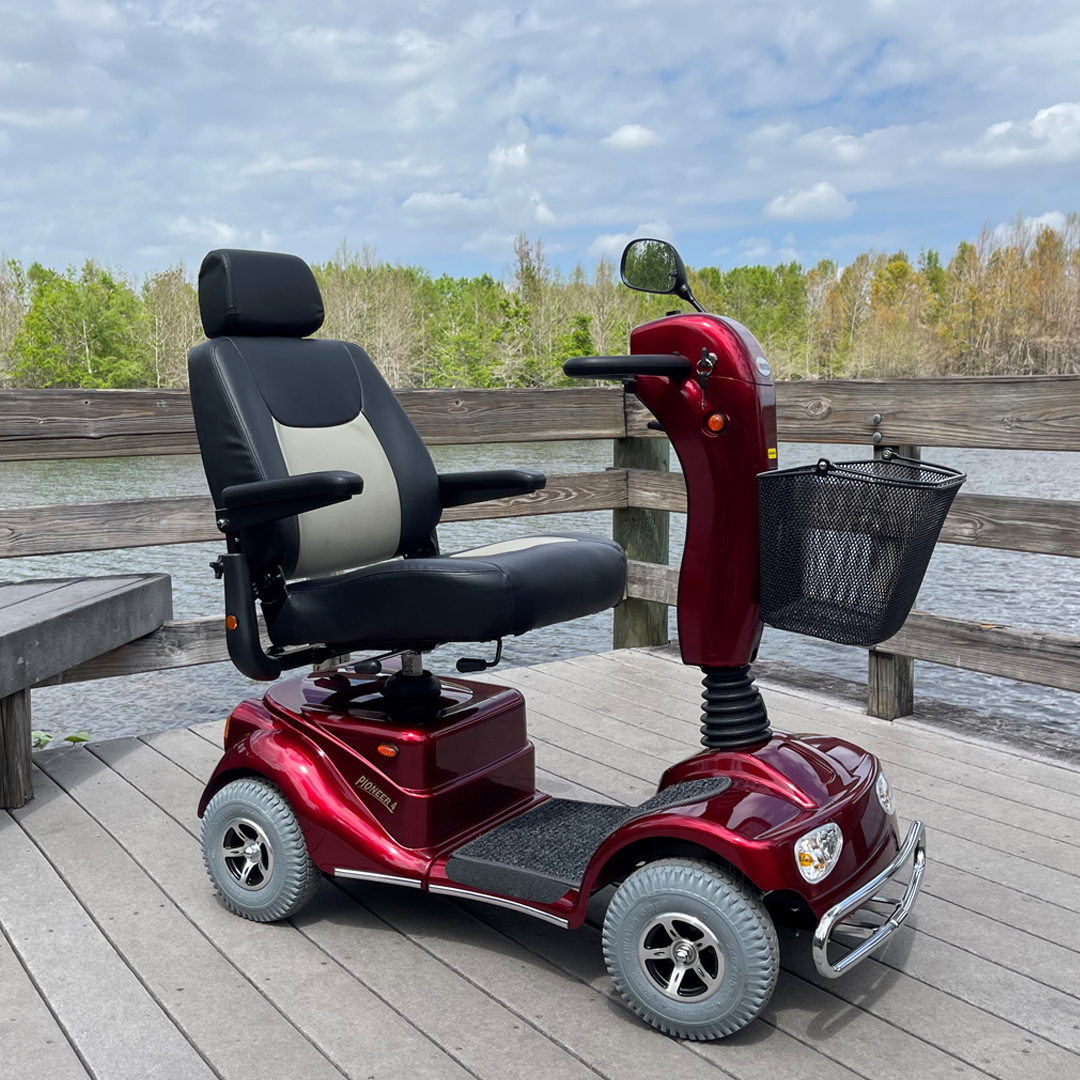

A mobility scooter can make it easier to shop, travel, spend time with family, enjoy outdoor activities, and continue doing the things that matter to you. But choosing one isn’t as simple as finding a model with the longest range or the most features.
The right scooter needs to fit you and the way you plan to use it.
A compact scooter that’s perfect for loading into a car may not provide the comfort someone wants for daily neighborhood trips. A larger scooter built for longer outdoor outings may be unnecessarily difficult to maneuver inside a home or store.
Before comparing individual models, it helps to understand the decisions that matter most. This guide walks through them one at a time.
Quick Take
Start with your daily routine rather than a list of specifications. Think about where you’ll ride, how often you’ll transport the scooter, the surfaces you’ll encounter, how long you typically stay out, and the amount of seating support you prefer.
Once you understand those needs, specifications such as turning radius, range, ground clearance, suspension, and weight capacity become much easier to evaluate.
Start With One Question: What Do You Want Your Scooter to Help You Do?
It’s easy to begin shopping by comparing models. A better starting point is to think about what has become difficult.
Maybe you can comfortably walk shorter distances but find a full afternoon of shopping exhausting. Perhaps you’d like to attend an outdoor event without worrying about how far you’ll need to walk. Or you may want something that lets you explore while traveling without relying on someone else for assistance.
Your answer helps define what matters most.
Consider the activities you’d like your scooter to support:
- Grocery shopping and errands
- Medical appointments
- Neighborhood trips
- Restaurants and shopping centers
- Parks and outdoor events
- Vacations and cruises
- Airports and other large venues
- Family outings
- Longer days away from home
You don’t necessarily need the scooter that can do the most. You need one that does what you need it to do well.
Understand the Main Types of Mobility Scooters
There are many individual models, but most mobility scooters can be grouped into a few broad categories.
Travel and Portable Scooters
Travel scooters are designed to make transportation easier. Many disassemble into several pieces that can be loaded separately into a vehicle. Some models are designed to fold instead.
They can be a good fit when:
- You regularly transport your scooter by car.
- Storage space is limited.
- Most trips are on relatively smooth surfaces.
- Portability matters more than having a large seat or extensive suspension.
The trade-off is that making a scooter smaller and lighter often means giving up some comfort, range, ground clearance, or outdoor capability.
That’s not necessarily a disadvantage. It’s simply part of choosing a scooter designed for a particular purpose.
Full-Size Scooters
Full-size scooters place more emphasis on comfort and everyday use.
Depending on the model, you may find:
- Larger seating
- More legroom
- Longer travel range
- Larger tires
- Suspension
- Greater ground clearance
- More storage or accessory options
For someone who expects to ride frequently or spend longer periods on the scooter, those features can make a meaningful difference.
The trade-off is transportation. A full-size scooter may be too large or heavy to disassemble and place into a typical vehicle without additional equipment.
Heavy-Duty Scooters
Heavy-duty scooters are larger models designed to provide additional capacity, space, and capability.
Depending on the scooter, this can mean:
- Higher weight capacity
- Wider seating
- More powerful motors
- Larger batteries
- Greater ground clearance
- More substantial suspension
- Larger tires
These features can be useful for riders who need them, but bigger isn’t automatically better. A heavy-duty scooter also requires more storage space and more room to maneuver and may require a vehicle lift or other transportation solution.
3-wheel scooters
A three-wheel design typically offers a tighter turning radius. That can be useful when maneuvering through stores, restaurants, hallways, or other confined areas.
Many riders also appreciate the additional open space around their feet.
4-wheel scooters
Four-wheel models generally provide a wider, more stable footprint and are commonly chosen for frequent outdoor use or varied surfaces.
The additional front wheel can increase the turning radius, however, which may make a four-wheel model less maneuverable in tight spaces.
How should you decide?
Think about where you’ll actually ride.
If indoor maneuverability is one of your highest priorities, a three-wheel model deserves consideration.
If you expect to spend considerable time outdoors or simply prefer the feel of four wheels beneath you, a four-wheel scooter may be a better fit.
There are other differences worth considering, so we’ll explore this subject in greater detail in our 3-Wheel vs. 4-Wheel Mobility Scooters comparison guide.
Think About Where You’ll Use Your Scooter
The environment in which you ride has a major influence on the scooter you should choose.
Mostly indoors
If you’ll regularly use the scooter inside your home, stores, restaurants, or other enclosed spaces, pay particular attention to:
- Overall width
- Overall length
- Turning radius
- Doorway clearance
- Maneuverability
A scooter can have excellent specifications and still be frustrating if it doesn’t comfortably fit the spaces you use every day.
Mostly outdoors
Outdoor riding introduces different considerations:
- Ground clearance
- Tire size
- Suspension
- Stability
- Battery range
- Lighting
- Terrain
A scooter designed primarily for smooth indoor flooring may feel very different on sidewalk joints, pavers, ramps, or uneven pavement.
A combination of both
Many people need both.
In that case, choosing a scooter often means finding the right balance between maneuverability and outdoor capability rather than maximizing either one.
Transportation Can Change the Entire Decision
This is one of the most important questions to answer early:
How will you get the scooter from one place to another?
If you plan to transport it in your vehicle frequently, find out:
- Does it disassemble?
- How many pieces does it separate into?
- What does the heaviest piece weigh?
- Will those pieces fit in your vehicle?
- Can you or the person helping you comfortably lift them?
- How difficult is it to put the scooter back together?
The total scooter weight doesn’t always tell you what you need to know.
For a disassembling scooter, the weight of the heaviest individual piece may be far more useful.
A scooter that technically fits into your vehicle isn’t truly portable for you if loading it is too difficult.
What about larger scooters?
Larger full-size and heavy-duty models may require a scooter carrier, vehicle lift, ramp, or appropriately equipped vehicle.
It’s worth considering transportation before choosing the scooter rather than trying to solve the transportation problem afterward.
Pay Attention to Fit
A mobility scooter should fit the rider—not merely support the rider’s weight.
Consider:
- Seat width and depth
- Seat height
- Legroom
- Armrest position
- Tiller position and adjustability
- Ease of getting on and off
- Available foot space
Two people who weigh exactly the same may have completely different seating and positioning needs.
This is one reason trying a scooter or having a proper fitting can be so helpful.
Weight Capacity Is a Limit, Not a Target
Every scooter has a specified maximum weight capacity.
That number matters, but it shouldn’t be treated as the only measure of whether a scooter fits someone properly.
You also need to consider seating dimensions, available space, comfort, stability, and the manufacturer’s requirements.
It’s generally better to choose a scooter with appropriate capacity for the rider rather than routinely operating at or near its maximum limit.
Turning Radius: A Small Specification That Can Matter a Lot
Turning radius tells you how much space a scooter needs to complete a turn.
This can become especially important in:
- Homes
- Elevators
- Store aisles
- Restaurants
- Hallways
- Apartments
- Other confined spaces
If you expect to use your scooter primarily outdoors, turning radius may be less important than suspension or ground clearance.
That’s why specifications should always be viewed in context.
Ground Clearance and Terrain
Ground clearance is the distance between the lowest part of the scooter and the ground.
A scooter with very low clearance may perform perfectly well inside stores and on smooth sidewalks but encounter difficulties with certain thresholds, uneven surfaces, or changes in pavement.
If your routine includes outdoor travel, consider the surfaces you’ll actually encounter:
- Sidewalks
- Pavers
- Parking lots
- Grass
- Uneven pavement
- Ramps
- Thresholds
Not every mobility scooter is intended for every type of terrain. Always follow the manufacturer’s guidance for the model you’re considering.
Suspension and Ride Comfort
If you’ll spend significant time riding outdoors, suspension can become an important comfort feature.
Sidewalk seams, textured pavement, pavers, and other small irregularities may not look significant when you’re walking past them, but they can feel quite different when you’re seated on a scooter.
Suspension can help absorb some of that movement and provide a smoother ride.
For short trips on smooth indoor surfaces, it may be less important.
Again, your environment determines the value of the feature.
Don’t Choose Based on Top Speed Alone
Top speed is easy to compare because it’s a simple number.
It’s also rarely the best way to choose a mobility scooter.
A higher maximum speed doesn’t tell you whether a scooter:
- Fits through your doorway
- Can be transported in your vehicle
- Provides comfortable seating
- Has an appropriate turning radius
- Handles the surfaces you encounter
- Fits your body properly
Speed matters, but it belongs much farther down the decision list than many first-time buyers expect.
Understanding Battery Range
Manufacturers typically provide an estimated travel range for each scooter.
That number is useful for comparing models, but it shouldn’t be interpreted as a guaranteed distance for every rider and every trip.
Actual range can vary based on factors such as:
- Rider and cargo weight
- Terrain
- Inclines
- Temperature
- Battery condition
- Tire condition
- Riding habits
- Frequent starting and stopping
Rather than asking only, “Which scooter goes the farthest?” ask:
How much range do I realistically need?
Someone using a scooter for occasional shopping trips has very different requirements from someone who spends much of the day traveling around a large community.
Leaving yourself a reasonable range margin is also preferable to planning every outing around the scooter’s theoretical maximum.
Think About the Seat
The seat becomes increasingly important as the amount of time you spend on the scooter increases.
Depending on the model, you may encounter compact seats, stadium-style seats, or larger captain’s-style seating.
Pay attention to:
- Width
- Depth
- Padding
- Back support
- Armrests
- Swivel function
- Height adjustment
A compact seat may be perfectly appropriate for short trips and help keep a travel scooter portable.
For longer outings, a larger and more supportive seat may be worth the added size and weight.
Consider How You’ll Get On and Off
Specifications don’t always capture how a scooter feels to use.
Ask:
- Does the seat swivel?
- Can the armrests move out of the way?
- Is there enough room for your feet?
- Can you comfortably reach the controls?
- Is the step-up height manageable?
- Can you sit down and stand up comfortably?
These details can make a significant difference in everyday use.
Storage and Accessories
Think about what you typically bring with you.
You may want space for:
- A purse or small bag
- Groceries
- A cane
- A walker
- Personal items
- A phone
- A drink
Depending on the model, accessories may include baskets, cup holders, cane holders, oxygen holders, rear storage, or other options.
Accessories shouldn’t determine the scooter you choose, but knowing what’s available can help you picture how the scooter will work in everyday life.
A Real-World Comparison
Consider two people shopping for their first mobility scooter.
Maria primarily wants a scooter for shopping, appointments, and family outings. She drives an SUV and expects to load the scooter several times a week.
For Maria, portability, the weight of the individual components, and ease of assembly may matter more than having the largest seat or longest possible range.
James expects to ride almost every day around his community. He doesn’t plan to regularly load the scooter into a vehicle and often spends several hours outdoors.
For James, seating comfort, suspension, range, tire size, and ride quality may deserve greater priority.
Neither scooter is “better.”
They’re solving different problems.
Common Mistakes to Avoid
Choosing solely by appearance
A scooter can look perfect online and still be poorly suited to your body, vehicle, home, or daily routine.
Assuming bigger is better
Additional size can provide comfort and capability, but it can also make storage, maneuvering, and transportation more difficult.
Focusing too much on top speed
Speed is only one specification and usually isn’t the most important one.
Ignoring the heaviest piece
If a scooter disassembles for transportation, check what you’ll actually need to lift.
Waiting until after the purchase to think about transportation
Know how the scooter will travel with you before you choose it.
Looking only at weight capacity
Capacity matters, but so do seat dimensions, legroom, positioning, and overall fit.
Buying for an occasional scenario instead of everyday life
It’s tempting to choose based on the most demanding situation you can imagine. Your normal routine should usually carry more weight in the decision.
Questions to Ask Before Choosing a Mobility Scooter
Before comparing your final options, ask yourself:
- Where will I use the scooter most often?
- Will I ride primarily indoors, outdoors, or both?
- How often will I transport it?
- What vehicle will I use?
- Who will load and unload it?
- How much can that person comfortably lift?
- How long are my typical outings?
- What types of surfaces will I encounter?
- How much seating support do I prefer?
- Do I need a particularly tight turning radius?
- Is the scooter appropriately sized for me?
- Where will I store it?
- Where and how will I charge it?
- Are parts and service available if I need them?
- Can I try the scooter or receive help with fitting before deciding?
If you can answer those questions, you’ve already narrowed the field considerably.
Frequently Asked Questions
How do I know what size mobility scooter I need?
Start with the rider’s weight and the manufacturer’s capacity, but don’t stop there. Seat dimensions, legroom, overall scooter dimensions, comfort, and where the scooter will be used all matter.
Is a 3-wheel or 4-wheel scooter better?
Neither is universally better. Three-wheel scooters often provide tighter maneuverability, while four-wheel models generally offer a broader footprint. The right choice depends largely on your environment and preferences.
Can mobility scooters be transported in a car?
Many travel scooters are designed to disassemble or fold for vehicle transportation. Larger models may require a lift, carrier, ramp, or larger vehicle. Always check the scooter’s dimensions and component weights against your specific vehicle and lifting abilities.
How far can a mobility scooter travel on one charge?
It depends on the model and operating conditions. Manufacturer range estimates are useful for comparison, but actual travel distance can vary with rider weight, terrain, inclines, temperature, battery condition, and other factors.
Can I use a mobility scooter indoors?
Many scooters can be used indoors, but dimensions and turning radius become especially important. Check doorways, hallways, elevators, and other spaces you expect to use.
Can mobility scooters go on grass?
Some scooters are better suited to varied outdoor surfaces than others. Tire size, ground clearance, stability, and manufacturer recommendations should all be considered. A scooter being capable of outdoor use doesn’t mean it’s designed for every surface.
Should I buy the scooter with the longest range?
Not necessarily. Extra range may come with larger batteries and additional weight. Choose enough range for your typical routine with a reasonable margin rather than maximizing one specification at the expense of everything else.
Should I try a mobility scooter before buying one?
When possible, yes. Sitting on and operating a scooter can tell you things that a specification sheet cannot, including how the seat feels, whether the controls are comfortable to reach, and how easily you can maneuver and get on or off.
Key Takeaways
Choosing a mobility scooter becomes much easier when you start with your life rather than the product catalog.
Think first about:
- Where you’ll use it
- How you’ll transport it
- How long you’ll ride
- The surfaces you’ll encounter
- Your comfort and fit
- The activities you want it to help you continue
Then use specifications to find the scooter that supports those needs.
The best mobility scooter isn’t necessarily the fastest, largest, or most feature-packed model.
It’s the one that fits naturally into your everyday life.
Need Help Narrowing Your Options?
If you’ve started comparing mobility scooters and still aren’t sure which type fits your needs, that’s completely normal. Specifications are much easier to interpret once they’re connected to how you actually plan to use the scooter.
Irvington Bartlett Mobility can help you compare your options, understand the differences between models, and find a scooter that fits your lifestyle, comfort needs, and transportation plans.
The goal is simple: help you choose the right scooter.