
Flexible Financing Options Available
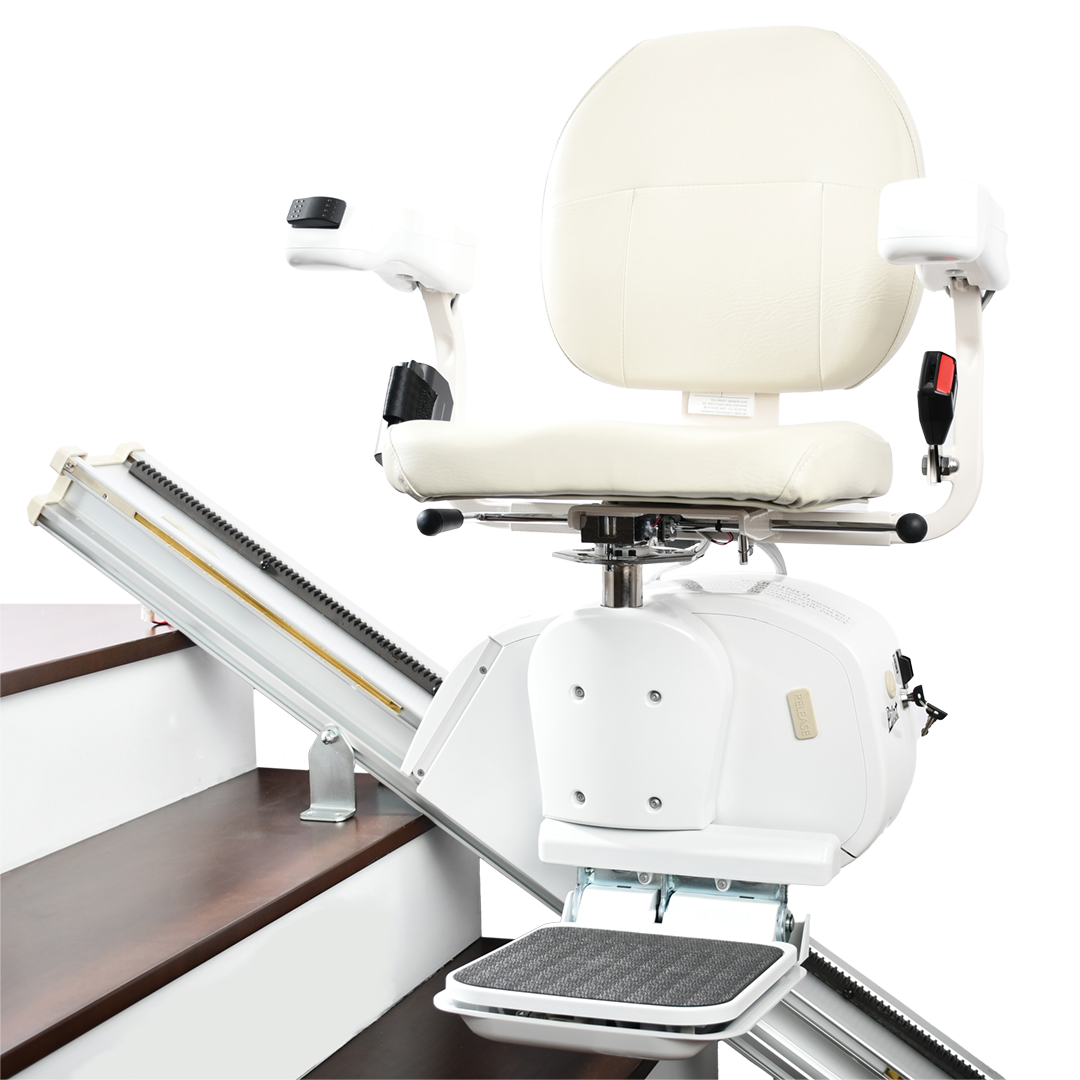

Stairs are such a familiar part of a home that most people don’t give them much thought—until using them starts to become difficult.
The change isn’t always dramatic. You may notice that you need to stop and rest halfway up. You might rely more heavily on the handrail or avoid going upstairs unless you really need to. A family member may begin carrying laundry or other items between floors because managing both the stairs and what you’re carrying no longer feels comfortable.
At some point, a practical question comes up:
Would a stair lift make sense?
There isn’t one answer for everyone. A stair lift can be an effective way to maintain access to different levels of a home, but whether it’s the right solution depends on the person, the staircase, and how the home is used.
Here’s what to consider.
Quick Take
A stair lift may be worth exploring when stairs have become a regular barrier to safely and comfortably using your home.
That could mean avoiding part of the house, needing another person’s assistance, becoming unusually tired when climbing stairs, or feeling increasingly uncertain about using them.
The goal isn’t simply to make stairs easier. It’s to determine whether a stair lift could help you continue using your home more independently.
The First Sign May Be Avoidance
Difficulty with stairs doesn’t always begin with an accident.
Often, it begins with small changes in routine.
Maybe you leave items downstairs rather than carrying them up. Perhaps you plan your day so you only make one trip between floors. You may find yourself spending more time on one level of the house simply because you don’t want to deal with the stairs.
Those adaptations can be easy to overlook because they happen gradually.
But if the staircase is beginning to determine where you spend your time or what you’re able to do in your own home, it’s worth taking a closer look.
Signs It May Be Time to Consider a Stair Lift
A stair lift may be worth exploring if you or a family member:
- Avoids the stairs whenever possible
- Needs frequent rest breaks while climbing
- Relies heavily on the handrail
- Feels unsteady or uncertain on the stairs
- Has difficulty carrying items between floors
- Requires another person’s assistance
- Has stopped using rooms on another level
- Is concerned about falling
- Is recovering from an injury, surgery, or change in mobility
- Wants to remain in a multilevel home but finds the stairs increasingly difficult
One of these signs alone doesn’t necessarily mean a stair lift is needed.
What matters is whether the stairs have become a consistent obstacle to using the home comfortably and independently.
A Stair Lift Doesn’t Replace Walking
One common misconception is that installing a stair lift means someone is “giving up” on walking or becoming less independent.
That isn’t necessarily the case.
A person may still walk throughout the home, go outside, shop, exercise, and participate in everyday activities while using a stair lift specifically for the staircase.
For someone who can comfortably walk on level surfaces but finds climbing stairs exhausting or difficult, the stair lift solves a very specific problem.
In that sense, it can help preserve independence rather than reduce it.
Think About What Is on the Other Floor
The importance of the staircase depends partly on what it connects.
Suppose the primary bedroom and bathroom are upstairs. If someone begins struggling with the stairs, that isn’t simply an inconvenience—it can affect access to an essential part of the home.
The same is true when stairs lead to:
- Laundry facilities
- A home office
- Frequently used living areas
- An exterior entrance
- Family spaces
- Essential storage
Ask yourself:
If I stopped using these stairs tomorrow, what parts of my home would I lose access to?
The answer can help clarify how important finding a long-term solution may be.
Consider How Often the Stairs Are Used
Someone who climbs a staircase once or twice a week has different needs from someone who travels between floors several times every day.
Think about your normal routine:
- How many times do you use the stairs each day?
- Do you intentionally combine trips to avoid using them?
- Have you changed your routine because of the staircase?
- Do you need someone nearby when using the stairs?
- Are you avoiding certain rooms?
If you’re organizing your day around avoiding the staircase, that’s useful information.
When a Stair Lift May Not Be the First Solution
A stair lift isn’t automatically the right answer whenever stairs become difficult.
Depending on the situation, other options may deserve consideration.
For example, it may be possible to:
- Improve stairway lighting
- Add or improve handrails
- Address loose or slippery stair surfaces
- Move frequently used items to another level
- Rearrange how rooms are used
- Temporarily live primarily on one floor
- Address a short-term mobility issue through rehabilitation or other professional guidance
If the difficulty is new or related to a medical condition, injury, balance problem, or recent change in mobility, it’s also important to discuss those concerns with an appropriate healthcare professional.
A stair lift addresses access to the staircase. It doesn’t diagnose or treat the reason stairs have become difficult.
Temporary vs. Long-Term Mobility Changes
Another important consideration is how long you expect the difficulty to last.
Someone recovering from surgery may need help navigating stairs for a relatively short period.
Someone experiencing a gradual, long-term change in mobility may be looking for a solution that allows them to continue using their home for years.
Neither situation automatically determines whether a stair lift makes sense, but the expected length of use can influence the decision.
It’s worth asking:
Is this likely to be a temporary challenge, or are we planning for changing mobility over time?
Straight and Curved Staircases
The staircase itself also affects the solution.
Straight staircases
A staircase that travels directly from one level to another without turns or intermediate landings can generally use a straight stair lift.
Straight lifts are typically simpler because the rail follows a single straight path.
Curved staircases
A staircase with turns, bends, intermediate landings, or other changes in direction may require a curved stair lift.
Because the rail must follow the shape of the staircase, curved systems are generally customized for the individual home.
The right configuration can only be determined after looking at the actual staircase.
What About Outdoor Stairs?
Stair lifts aren’t limited to the interior of a home.
Outdoor models are designed for exterior stairways and may be useful when steps make it difficult to reach an entrance, patio, or another frequently used area.
Outdoor equipment needs to be designed for exposure to the elements, so an indoor stair lift shouldn’t simply be installed outside.
Will a Stair Lift Fit My Staircase?
This is one of the most common questions homeowners have.
A stair lift attaches to the stair treads, rather than being suspended from the wall. That means installation usually doesn’t require major structural changes to the home.
However, the staircase still needs to be evaluated.
Important considerations can include:
- Stair width
- Stair length
- Landings
- Turns or curves
- Doorways near the staircase
- Space at the top and bottom
- Nearby obstacles
- The user’s ability to get on and off the lift
This is why an in-home assessment is valuable. Measurements alone don’t always tell the full story.
Think About Getting On and Off the Lift
The ride itself is only one part of using a stair lift.
The person also needs to be able to approach the chair, sit down, use the controls, and safely get off at the destination.
Depending on the system, helpful features may include:
- Swiveling seats
- Folding armrests
- Folding footrests
- Seat belts
- Powered features
- Remote controls
The right features depend on the individual.
This is another reason choosing a stair lift should begin with the person rather than the equipment.
What Safety Features Should You Look For?
Modern stair lifts may include a variety of features designed to support safe operation.
Depending on the model, these can include:
- Seat belts
- Obstruction sensors
- Swivel-seat locking
- Footrest sensors
- Battery backup
- Folding rails or seats
- Call/send controls
- Audio or visual alerts
Not every person needs every available feature.
The important question is whether the stair lift provides the features necessary for the user and the layout of the home.
What Happens During a Power Outage?
Many stair lifts operate using rechargeable batteries that are maintained by the home’s electrical supply.
Because the lift itself operates from battery power, many systems can continue making a limited number of trips during a household power outage, depending on the model and battery condition.
This can be especially useful in areas where storms and temporary outages occur.
Battery configuration and backup capability vary by manufacturer and model, so this is something to confirm when comparing systems.
A Real-Life Example
Consider a homeowner whose bedroom is upstairs.
She still walks comfortably throughout the first floor and enjoys going out with family, but climbing the stairs has become exhausting. She now tries to make only one trip upstairs each evening and occasionally asks someone to bring things down for her.
Moving the bedroom downstairs would require giving up a frequently used living space.
In this situation, a stair lift may allow her to continue using the home much as she always has while addressing the one area that has become difficult.
Now consider someone whose trouble with stairs began immediately after a procedure and whose healthcare team expects substantial improvement over the next several weeks.
That situation may call for a different conversation.
The same staircase can present two very different decisions depending on the person using it.
Consultant’s Tip
Don’t wait until you’re choosing between a stair lift and an immediate move out of the home to begin exploring your options.
Learning what’s possible doesn’t commit you to installing anything.
An earlier assessment gives you time to understand the staircase, compare solutions, ask questions, and make a decision without unnecessary pressure.
Questions to Ask Before Choosing a Stair Lift
If you’re considering a stair lift, these questions can help guide the conversation:
- Which staircase is creating the problem?
- How frequently is it used?
- Is the mobility challenge expected to be temporary or long-term?
- Can the person safely get on and off a stair lift?
- Is the staircase straight or curved?
- Is there adequate space at the top and bottom?
- Are there doors or walkways near the staircase?
- Will other household members still need to use the stairs normally?
- Which safety and comfort features would be useful?
- Is outdoor use involved?
- What happens during a power outage?
- What service and maintenance support is available?
- What warranty applies to the equipment?
- How will the lift affect normal use of the staircase?
- Has the staircase been professionally measured and evaluated?
You don’t need to know all the answers before asking for help. These questions simply provide a useful starting point.
Frequently Asked Questions
Do stair lifts attach to the wall?
Generally, no. Stair lift rails are typically secured to the stair treads rather than mounted to the wall. Installation requirements vary by system and staircase.
Can other people still use the stairs?
Usually, yes. Many stair lifts have folding seats, armrests, and footrests that reduce the amount of space they occupy when not in use. The available walking space depends on the staircase and the particular lift.
Can a stair lift go around corners?
Yes. Curved stair lifts can be designed for staircases with turns, curves, or intermediate landings. These systems typically require a rail configured for the specific staircase.
Can stair lifts be installed outdoors?
Yes, but the lift must be designed for outdoor use and exposure to weather.
Will a stair lift work during a power outage?
Many modern stair lifts operate on rechargeable batteries and can continue operating for a limited period during an outage. The number of trips and charging configuration depend on the model and battery condition.
Does installing a stair lift require major remodeling?
Often, no. Because the rail is generally attached to the stairs rather than the wall, installation usually doesn’t require major structural renovation. Every staircase is different, however, and should be evaluated before installation.
How do I know whether I need a straight or curved stair lift?
A staircase that runs in one straight line generally uses a straight lift. Turns, bends, intermediate landings, or other changes in direction may require a curved system. An assessment can determine the appropriate configuration.
Is a stair lift only for someone who can no longer climb stairs at all?
No. Some people consider a stair lift while they can still use the stairs but find doing so increasingly tiring, uncomfortable, or difficult. Planning earlier can provide more time to evaluate the available options.
Key Takeaways
A stair lift may make sense when the staircase has become a recurring barrier to safely and comfortably using your home.
The decision isn’t based on age alone, and you don’t necessarily need to wait until the stairs become impossible to use.
Consider:
- How the stairs affect your daily routine
- Which parts of the home they connect
- Whether you’re beginning to avoid them
- Whether the mobility change is temporary or long-term
- Your ability to get on and off the lift
- The configuration of the staircase
- The alternatives available to you
The purpose of a stair lift isn’t simply to move someone between floors.
For the right person and the right home, it can help keep the whole home accessible.
Wondering Whether a Stair Lift Would Work in Your Home?
You don’t need to know which model or configuration you need before asking that question.
Irvington Bartlett Mobility can learn a little about your needs and schedule an in-home assessment to evaluate the staircase, discuss how you use your home, and explain the available options.
From there, you can decide whether a stair lift makes sense for you—without assuming the answer before we’ve looked at the situation.